


In Peru, the shampoo industry is made up of many brands that compete to increase their market share. Among the leading companies are Procter & Gamble, Unilever, and L’Oréal. Furthermore, over the last five years, new brands and product lines dedicated to hair care have entered the Peruvian market, offering new value propositions in their products (El Comercio, 2014; Biotop Professional, 2018; Gestión, 2015). As a result of the growth of the shampoo industry and the increasingly competitive environment, it is necessary for companies in this sector to analyze and understand the behavior of the Peruvian consumer in the hair-care product purchase process.
The objective of the study was to analyze shopper behavior during the purchase process at the point of sale within the hair-care category. Likewise, the specific objectives were to analyze visual attention to: shelves, packaging, prices, and advertising materials for shampoos.
PROCEDURE
A group of women between 18 and 45 years old was recruited at the same supermarket and given a shopping context that included a shampoo, a soap, and a deodorant for personal use. This context described the situation and the need. Participants were also reminded that there was no time limit to choose the products and that, after making their selection, they should proceed to checkout.
The study used eye-tracking technology to record eye movements in response to specific stimuli (Gonzáles & Velásquez, 2012). This method is used to examine the effect of consumer attention on information processing, preferences, and choice and evaluation behavior (Van Loo, Grebitus, Nayga, Verbeke, & Roosen, 2018). Similarly, Meyerding and Merz (2018) recommend eye tracking to study consumer attention because it allows the evaluation of the consumer’s selection and observation process.
Based on the recorded information, the following questions were addressed:
- What relationship exists between visual attention and purchase intention at the point of sale?
- How much visual attention time does the shopper dedicates to the hair-care category?
- Is my brand being seen by shoppers at the point of sale?
- How do shoppers interact with the packaging?
- How much visual attention time does the shopper spend reading packaging information?
- Are buyers of other brands seeing my product?
- What other brands are buyers of my brand looking at?
- Is price relevant for the category?
- Is point-of-sale advertising material relevant for generating purchase intention?
FINDINGS
1. Shopper behavior when choosing a brand in the supermarket
- The shopper performs a rapid visual scan.

Brands have between 0.5 and 3 seconds to capture attention along the shelf.
- The point of entry to the shelf is relevant—the side from which the shopper approaches impacts those first seconds of visibility, as the shopper does not necessarily walk the entire aisle.

- Then, the shopper observes and compares—brands have between 7 and 10 seconds to communicate their portfolio and the most relevant product features.
2. Which areas of a shelf are the most visible?
The top front row is the most effective—the impact of the second and third rows may depend on the packaging layout used.

- How does the shopper interact with brand packaging?
Packaging design generates different behaviors. In packages with a lower information load, time is mainly devoted to the logo and the variant, without the need to read detailed descriptions.
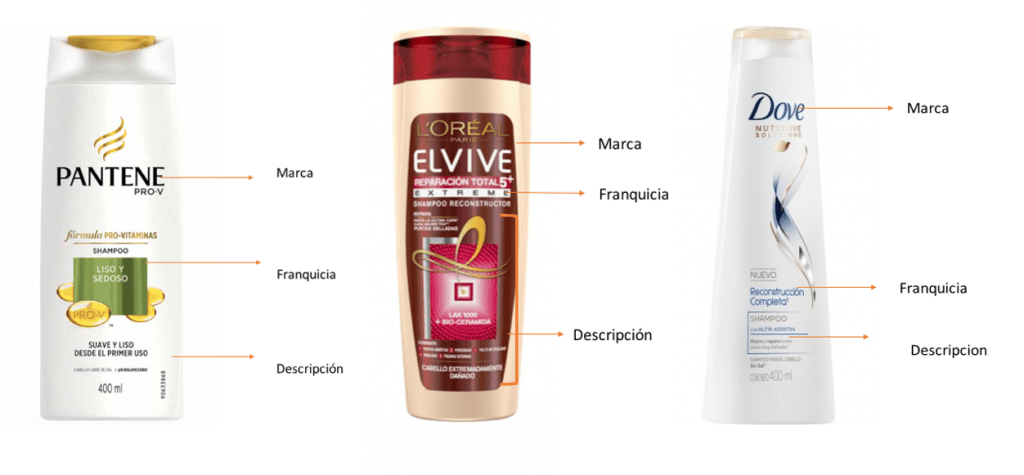


The time spent understanding information may allow shoppers to move from one package to another more quickly and thus, compare more versions.
3. Price, product, promotional material
- Hair care: a category where price matters.

85% of shoppers looked at the prices and devoted 27% of their visual attention time to them.

38% of shoppers looked at some promotional material on the shelf, dedicating 3% of their visual attention time to it.
4. Brands that share visual attention
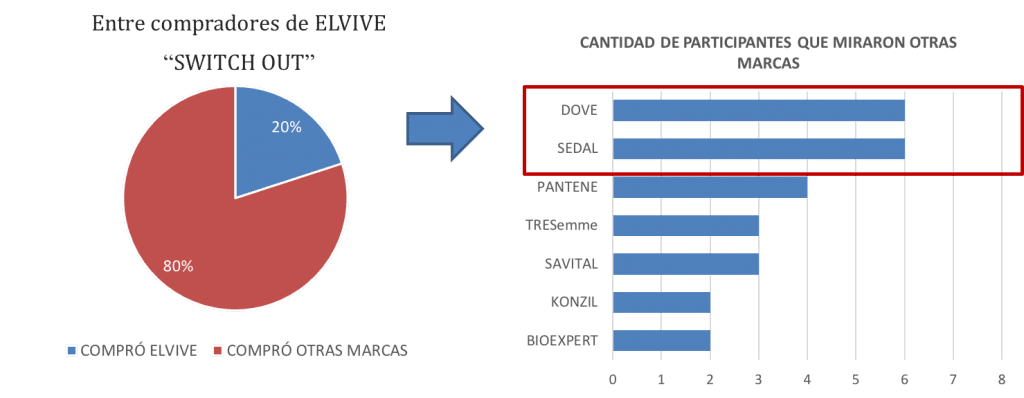
- Protecting Switch-out
- Of the people who purchased ELVIVE, how many looked at the main competing brands?
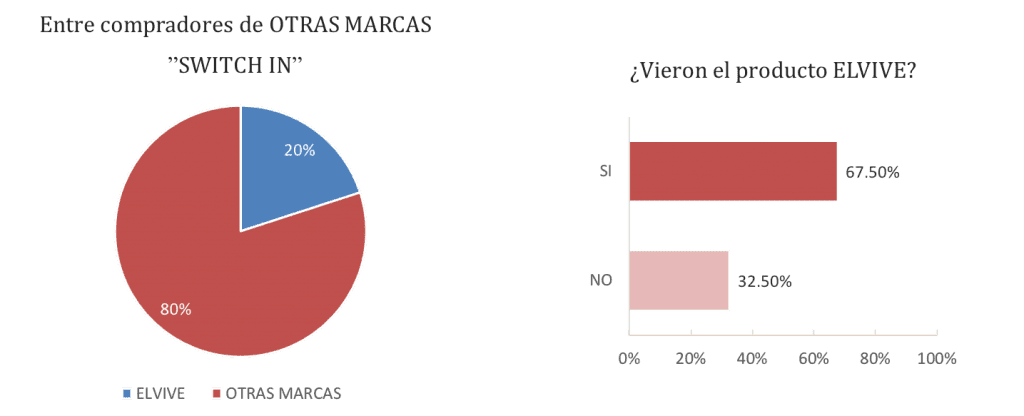
- Capture Switch-in
- Capturing buyers of other brands who saw the ELVIVE product on the shelf.
- On average, 1 out of every 3 people did not see the ELVIVE product on the shelf.
5. Relationship between visibility and purchase intention

Source: Neurometrics
- The greater the consumer’s visual attention to a specific shampoo brand, the higher the purchase intention. However, there were atypical cases, such as Sedal and Konzil, that captured visual attention but did not convince shoppers to make the purchase.
- The greater the consumer’s visual attention to the price of a shampoo brand, the greater the purchase intention.
“85% of shoppers looked at the price and devoted 27% of the total visual attention time on the shelf to it.”
- Brands had between 0.5 and 3 seconds to capture the shopper’s initial attention along the shelf, and the shopper does not necessarily walk the entire aisle.
- Brands have less than 10 seconds to communicate their portfolio and relevant features through packaging.
- Of the total participants who did not select a given brand, nearly one third did not see that brand at the point of sale, despite it being displayed.
RECOMMENDATIONS
- Shopper’s behavior on the shelf
- Location is essential to generate visibility during the initial scan, which lasts between 0.5 and 3 seconds.
- If the brand is located at one end of the shelf, it is important to know which end has higher traffic.
2. High-visibility shelf zones
- Place the franchise you most want to promote in the top front row.
- Test different product layouts to optimize visual attention time for the second and third rows.
3. Packaging Interaction
- Complex packaging makes it difficult to identify the franchise, considering the short time (between 7 and 10 seconds) a shopper devotes to evaluation and comparison on the shelf .
Having in-store biometric reports that complement customer understanding through multiple information sources adds new perspectives to marketing decision-making and improves effectiveness.
It was presented at Talkin 2019, SIUMER 2019, ESOMAR Brazil 2019, and the Cosmetics and Hygiene Guild of the Lima Chamber of Commerce.